



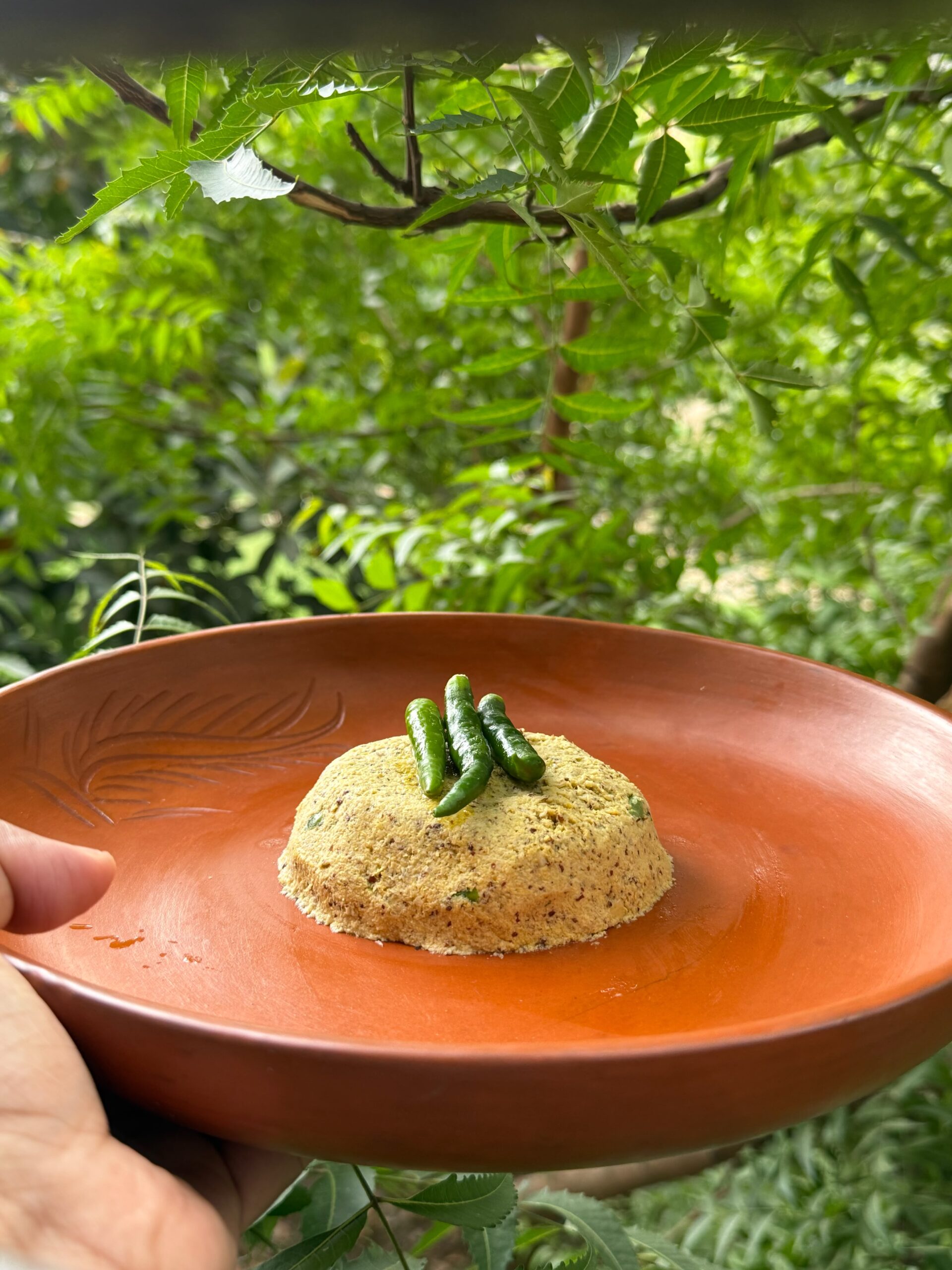
 There are certain foods that do not merely remind you of home; they carry you back to it. Kochubata is one of them.
Whenever I think of it, I am transported to a slow, sun-washed afternoon of childhood, when the breeze moved lazily through the windows and somewhere in the kitchen, a grandmother sat before a shilpata, the traditional flat grinding stone and its hand-held stone grinder, patiently turning humble ingredients into something far greater than the sum of their parts.
I can almost hear it: the gentle, rhythmic scrape of stone against stone.
Shrrr… shrrr… shrrr.
The boiled kochu would sit waiting on one side of the kitchen, its rough exterior softened by heat. On the shilpata, green chillies would be crushed with salt, their sharpness slowly dissolving into the earthy softness of the taro. The motion was unhurried, almost meditative, the kind of cooking that belonged to afternoons when nobody seemed to be in a hurry.
Then came the ‘shorshe bata’ the freshly ground mustard paste. Sharp, earthy, faintly bitter, and wonderfully pungent, it brought an entirely different dimension to the kochubata. And finally, a generous drizzle of golden mustard oil would tie everything together, its unmistakable aroma rising from the warm mash.
Perhaps this is what makes kochubata so compelling. Its richness does not come from elaborate ingredients. It comes from layers of pungency, earthiness, heat, and texture.
The tender kochu provides the soft, almost buttery body.
The green chilli brings brightness and fire.
The freshly ground mustard paste lends a deep, nasal sharpness.
And the mustard oil leaves behind that unmistakable Bengali warmth.
Sometimes, finely chopped onion finds its way into the mixture, adding a delicate sweetness and crunch. Sometimes, a little crushed dried red chilli intensifies the heat. But, the heart of it remains wonderfully simple. Kochu. Mustard. Chilli. Salt. Mustard oil. And perhaps that is why kochubata feels less like a recipe and more like a memory.
I fell in love with it all over again while reading Kallol Lahiri’s Indubala Bhater Hotel. There was something about encountering food so intimately through literature seeing it transformed from something eaten at home into something narrated, remembered, and culturally inhabited, that made me look at kochubata differently.
The dish I had known became a story. And the story, in turn, made me hungry for the dish again.
I began to remember the shilpata, the sound of stone against stone, the smell of mustard rising from the kitchen, and the quiet anticipation of eating the bata with freshly steamed rice. Because that is the peculiar magic of food in literature: sometimes a description can return a flavour to you that you thought you had forgotten.
And kochubata deserves to be remembered.
Once the mixture is ready, it needs little ceremony. A mound of steaming white rice is enough. The kochubata sits beside it, soft and rustic, carrying the deep green heat of chilli and the unmistakable pungency of freshly ground mustard.
Mix a little with the hot rice. Let the steam release the mustard oil.
Take a bite.
And suddenly, there it is again, the earthiness of kochu, the piercing warmth of mustard, the sudden spark of chilli, the comforting softness of rice.
A whole afternoon on a plate.
Perhaps this is why I find kochubata so deeply fulfilling. It is buttery without being indulgent, fiery without being aggressive, rustic without being unsophisticated. It is the kind of food that does not announce itself; it simply stays with you.
It reminds us that Bengali gastronomy has always known how to make poetry out of humble ingredients.
A root pulled from the earth.
A handful of mustard.
A few green chillies.
A splash of golden oil.
A shilpata.
A grandmother’s hands.
A plate of warm rice.
And somewhere between the cool stone of the shilpata and the warmth of the rice, a childhood afternoon becomes edible.
That, perhaps, is the real magic